A second Wi-Fi name does not always mean isolation
Guest access, IoT names, and device isolation are related features with different effects.
Trace the connection from device to network. Practical explanations for Wi-Fi, Ethernet, and connected accessories.
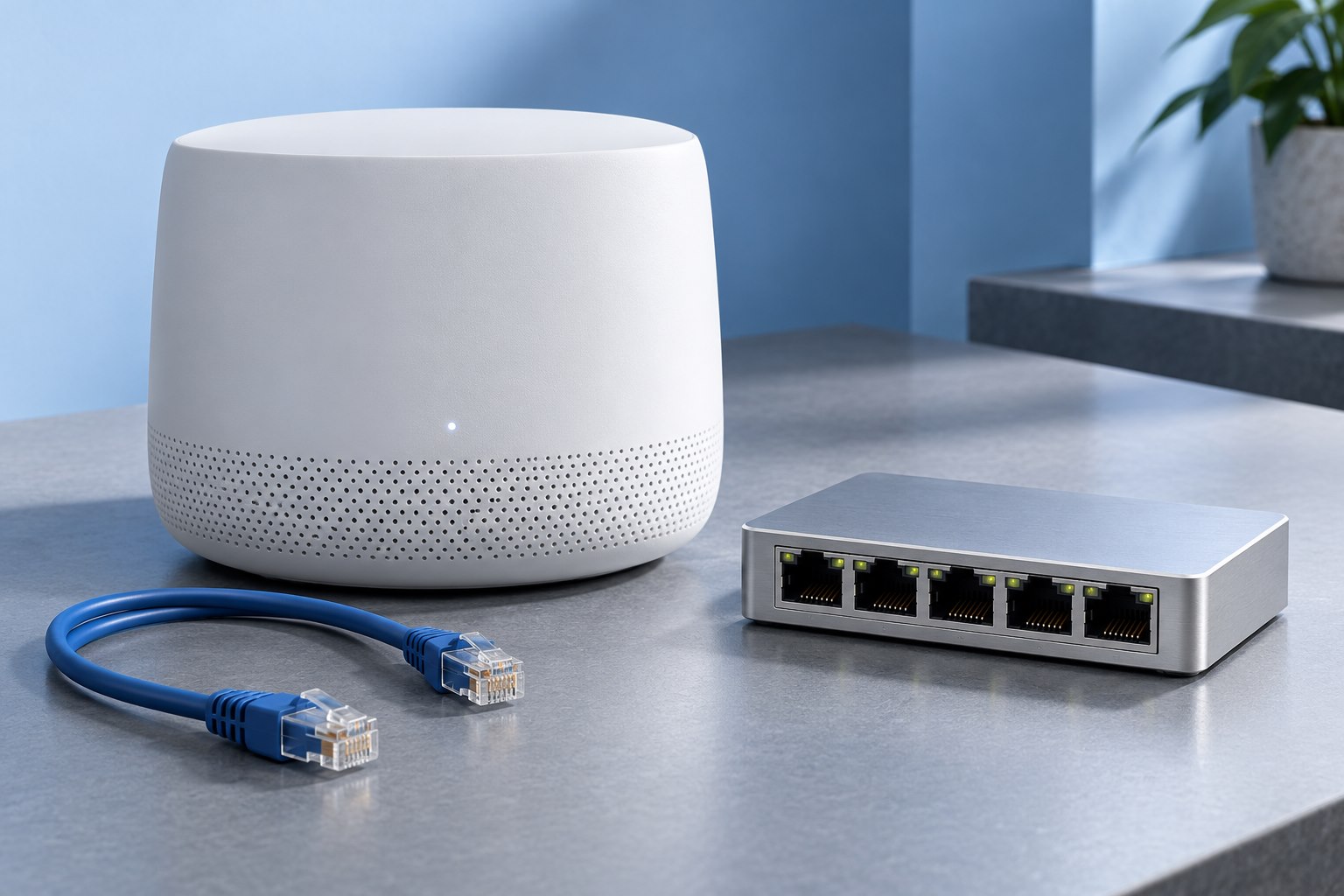
Guest access, IoT names, and device isolation are related features with different effects.
Count usable connections, check link speeds, and give a simple switch a simple topology.
Cable length, installation quality, and the ports at each end determine what a cable can do.
Compare wired and wireless paths, local and internet traffic, and throughput versus consistency.
A faster link helps only when the computer, switch, cable, and destination can use it.
Use supported modes deliberately and isolate compatibility problems before changing the whole network.
Distinguish the application standard, radio network, controller, and border-router role before buying accessories.
A better location can solve a coverage problem that a faster specification leaves untouched.
A satellite must reach the main network as well as the devices in the weak room.
Choose which device manages the network before adding another wireless box.
Power, pairing mode, saved hosts, supported functions, and drivers each need their own check.
Hardware revision, regional firmware, saved settings, and uninterrupted power make updates predictable.
Band choice depends on device support, distance, interference, and the task.
Trace the topology, choose the correct ports, and confirm the system is actually using the cable.
Client support, wired ports, regional spectrum, and the actual bottleneck decide the value of an upgrade.
Separate power, local networking, controller reachability, and cloud service before resetting it.
The device pair, obstacles, and nearby equipment matter more than one universal distance claim.