A backup is more convincing after a restore test
Recover a small representative set without overwriting your current files.
Make room, move files, and keep a recoverable copy. Put drive specifications in the context of real file workflows.
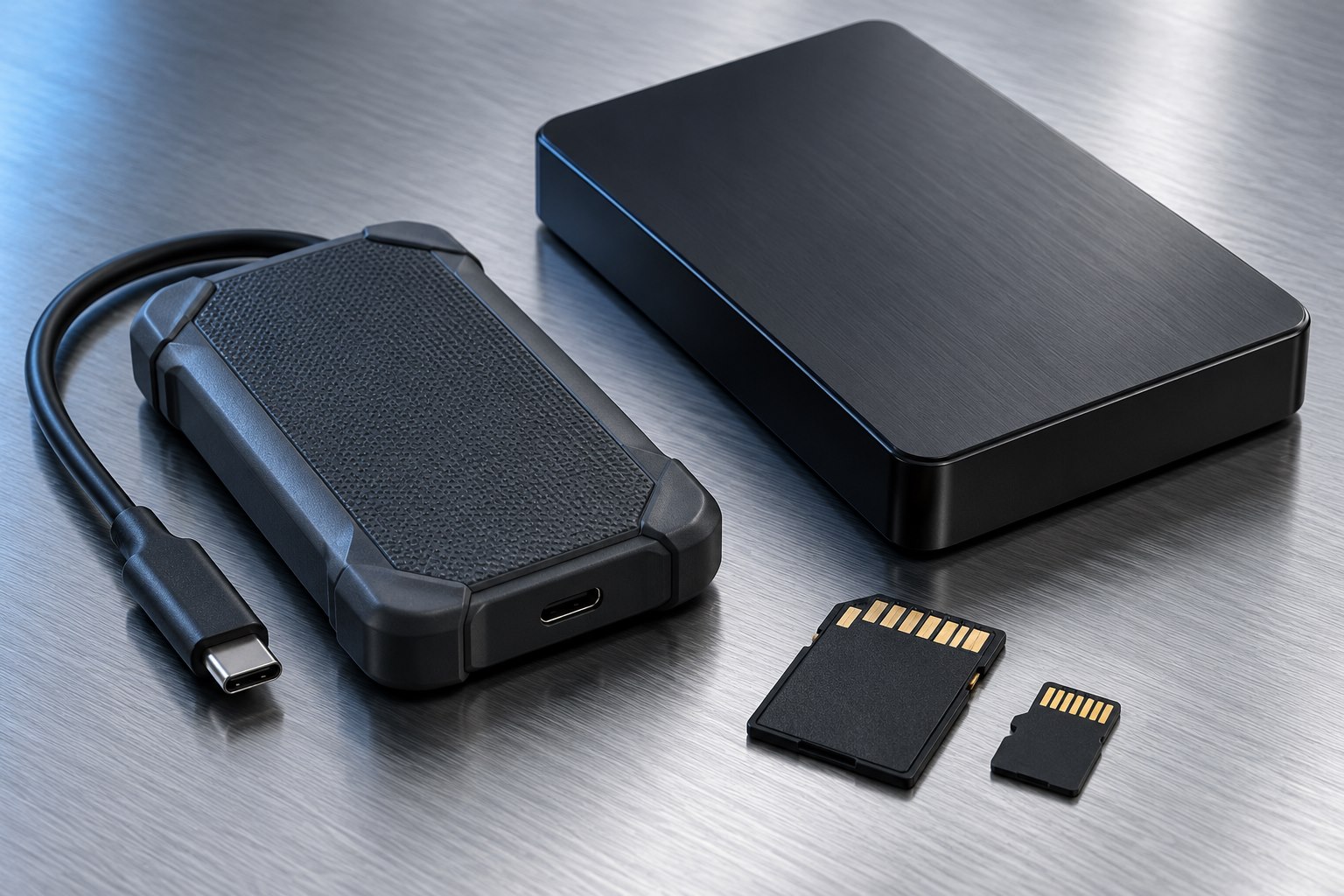
Recover a small representative set without overwriting your current files.
Protect the data on a lost drive while keeping a tested way to unlock it yourself.
Three copies are useful only when one incident cannot easily remove all three.
Traceable purchase, capacity verification, and a real device test catch different problems.
Slot type, bus support, simultaneous use, and physical access matter more than the number of openings.
Cross-platform access, backup software, large files, and encryption can pull the choice in different directions.
Dash cams and monitoring cameras need a supported card designed for frequent rewriting.
Availability across devices is useful, but recovery depends on version history, retention, and independent copies.
A fast working drive and an economical backup drive do different jobs, even when both hold the same files.
A warm case, a slowdown, and a disconnect mean different things; diagnose them in context.
Identify the interface, preserve old files, check condition, and avoid giving uncertain hardware the only copy.
Form factor, storage interface, board length, and thermal fit are separate compatibility checks.
Choose by who needs access, how much management you want, and where the backup will live.
Dates, project identifiers, and a clear distinction between originals and exports make storage easier to recover.
A named destination, a verified second copy, and a clear card state make the process repeatable.
Capacity, bus generation, recording class, and application class describe different requirements.
Drive redundancy can preserve availability while a separate backup preserves recoverable history.
Find the active file or process before disconnecting a storage device.
Units explain part of the difference; partitions, formatting, and existing data explain the rest.
Write cache, temperature, file mix, and the source drive can each change a long transfer.