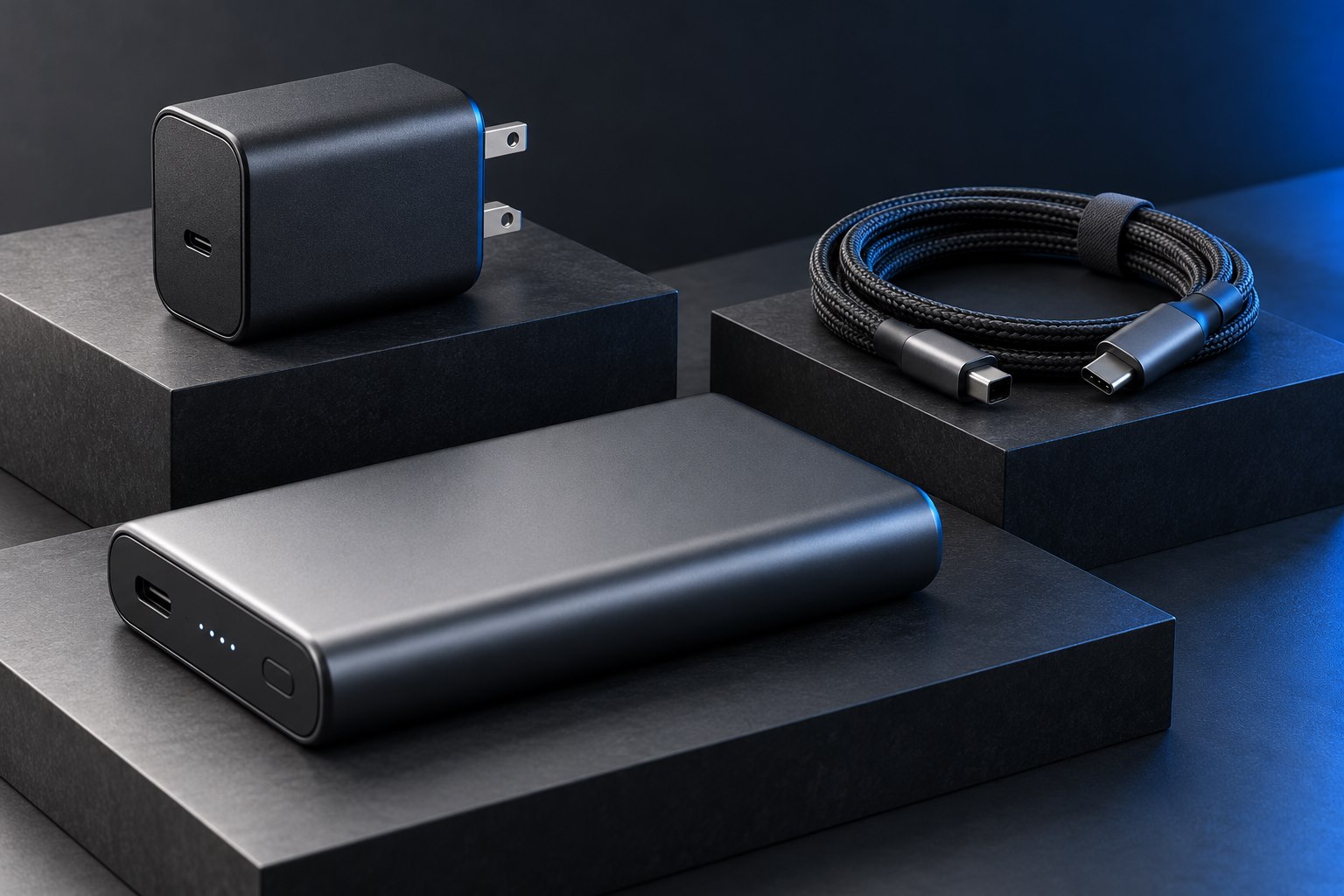
Separate three different functions
A plug adapter changes the physical connection to an outlet. A voltage converter changes electrical voltage within its specifications. A USB charger converts its supported mains input into a suitable low-voltage output for devices. These functions should not be confused. A charger may already accept a broad input range, in which case the appropriate plug arrangement is the remaining question. Another device may not, and a passive plug adapter does not change that limitation.
Read the input label on the exact charger you will carry. Look for the supported voltage range and frequency, then compare them with the destination's supply. Do not assume every charger from one brand has identical input requirements. If the label is missing or unreadable, use the manufacturer's model-specific documentation or replace it with a clearly documented suitable product.
Choose the plug arrangement for the actual charger
Some chargers have an approved removable mains plug module, while others require an external travel adapter. Apple's World Travel Adapter Kit, for example, is designed for particular Apple adapters with a removable wall-plug section. That compatibility should not be generalized to unrelated products with superficially similar parts. Use the charger manufacturer's supported attachment system when available.
For an external adapter, check that it supports the destination's outlet type and preserves any required grounding connection. A bulky charger can place considerable leverage on a small adapter, so inspect the physical fit as well as the electrical rating. If the assembly hangs loosely or blocks neighboring outlets, a supported charger with a short mains lead may be more practical.
Keep the kit limited to its intended loads
A travel adapter suitable for electronics charging should not be treated as permission to connect any appliance. High-power heating appliances create different requirements. Keep this kit focused on the chargers it was selected for, and follow the product's current instructions and ratings. If a device's input compatibility is uncertain, resolve that before travel instead of relying on the fact that the plug can be made to fit.
- Record the charger's model and supported mains input range before packing.
- Check the destination's outlet type and supply using a reliable current source.
- Use a properly rated adapter or approved removable plug system for that charger.
- Keep required grounding intact and avoid stacking several loose adapters.
- Include the device-side cables and verify multiport allocation if several devices will charge together.
Plan for the hotel-room layout
Outlets may be behind furniture, beside a bed, or too close together for a large wall charger. A compact charger with clear port labels can help, but the cable lengths still need to reach a safe resting place for devices. Do not leave a phone or power bank hanging from its lead. Keep charging equipment uncovered on a suitable surface and away from bedding or liquids.
Before departure, assemble the complete kit at home using its normal input arrangement and confirm the device-side charging combination. This cannot verify a foreign outlet, but it can reveal missing cables, unsuitable port sharing, or a watch puck that was left out. Keep the adapter with the charger in a dedicated pouch so it is not forgotten in the wall when packing to leave.
Sources & further detail
These references support the technical context. Examples and selection advice are editorial explanations; verify the documentation for your exact equipment and software.
A detail we should revisit? Send the guide URL and the relevant documentation to SmithKent5791@outlook.com.
Read the editorial policy