Separate ordinary aging from physical warning signs
A power bank delivering less useful energy over time may be aging, but a swollen or damaged enclosure is a different issue. Do not keep using or charging a bank that is swelling, leaking, producing an abnormal odor, or showing serious physical damage. Anker's handling guidance advises stopping use when swelling is noticed. The fact that a damaged bank can still charge a phone does not establish that it is suitable to keep using.
Do not press a bulging case flat, puncture it, or open the bank to investigate its cells. A consumer power bank is not a suitable casual repair project. Follow the manufacturer's instructions for the condition and contact an appropriate local battery-disposal service for handling guidance. If there is active smoke, fire, or an immediate hazard, move away and contact emergency services rather than attempting a routine inspection.
Check the exact model for recalls
A recall can apply to particular models or serial-number ranges even when the unit looks normal. Read the label and check the manufacturer's official recall information. Do not assume that every product from a brand is affected, or that a familiar product name identifies the exact unit. Anker's recall pages use model and serial information to determine the applicable remedy, illustrating the need for precise identification.
If the unit is affected, stop using it and follow the recall procedure. Keep the requested purchase or identification information, but do not ship or discard the bank through an improvised route. Recalled lithium-ion products can have specific handling requirements. A general recycling bin or ordinary trash is not the appropriate default destination for a questionable battery product.
Investigate reduced runtime under comparable conditions
If there are no physical concerns or applicable recall instructions, compare performance with a familiar device and similar workload. A new phone, wireless charging, or charging while navigating can change the useful result without proving that the bank lost all its capacity. Check the cable and supported output mode too. A bank that supplies power slowly may be facing a compatibility limit rather than a simple capacity problem.
Keep the comparison modest: note the bank's starting level, the receiving device, and the task. Consumer percentage indicators and charging counts are not laboratory capacity measurements. If performance has become unreliable enough that the bank no longer serves its purpose, replacement can be reasonable even without an exact remaining-capacity figure. Dependability is part of the accessory's value.
Replace around the actual need
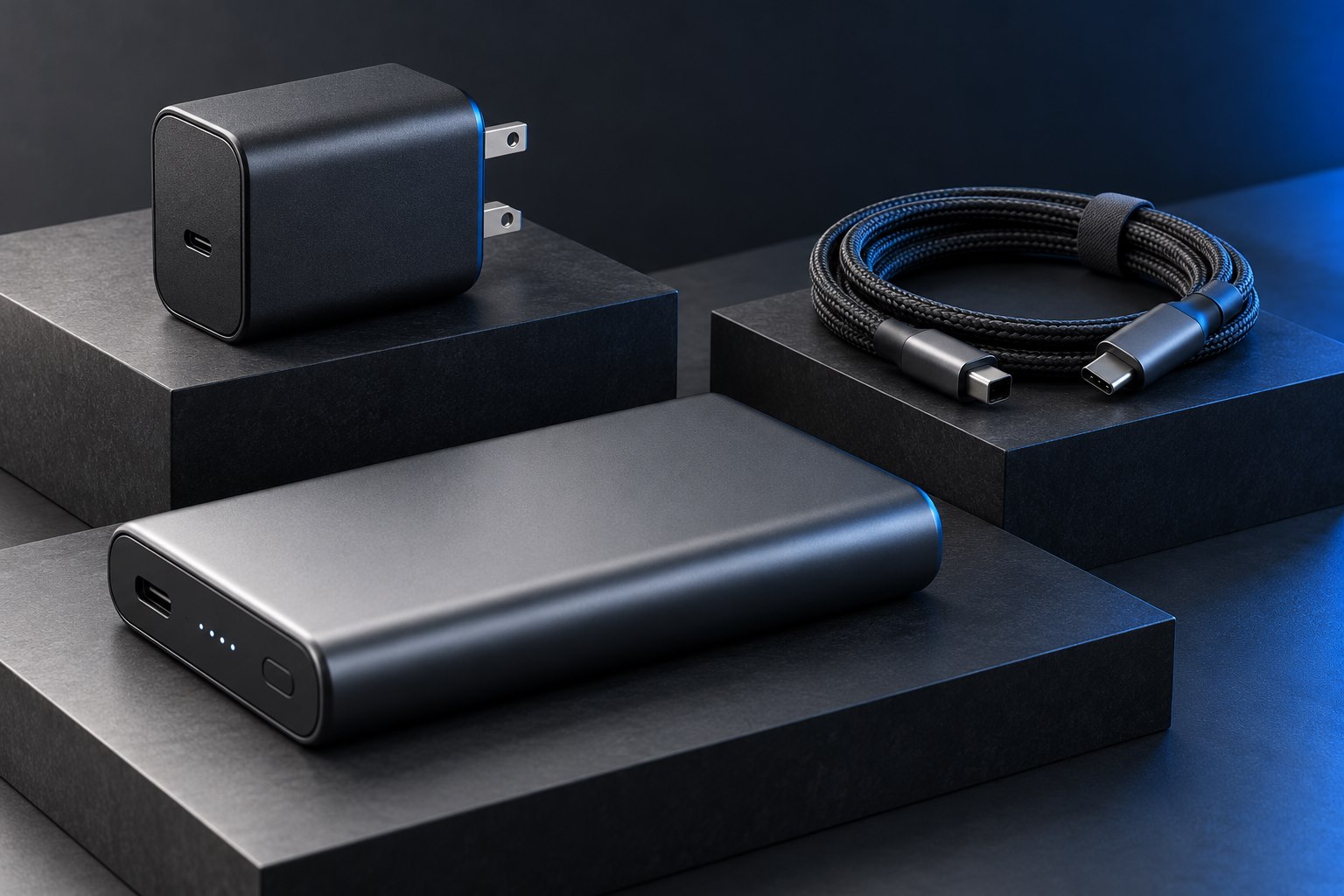
Before buying another bank, reconsider the energy gap it must cover. A lighter model with suitable output may be enough for a phone top-up; a laptop requires a different power and capacity assessment. Prefer a traceable product with clear model information, documentation, support, and appropriate compliance. Keep the rating label readable so future support and recall checks remain possible.
Arrange disposal through a service that explicitly accepts the bank's condition, and ask in advance about damaged or recalled units. Follow the manufacturer's and local facility's instructions rather than leaving the old bank in a drawer indefinitely. A replacement is not complete until the retired battery product has an appropriate handling plan. The aim is to keep a dependable accessory in use and remove a questionable one from the routine.
Sources & further detail
- Anker: Handling a swollen power bank
- Anker: Official power-bank recall information
- Anker: Power-bank disposal and recycling
These references support the technical context. Examples and selection advice are editorial explanations; verify the documentation for your exact equipment and software.
A detail we should revisit? Send the guide URL and the relevant documentation to SmithKent5791@outlook.com.
Read the editorial policy